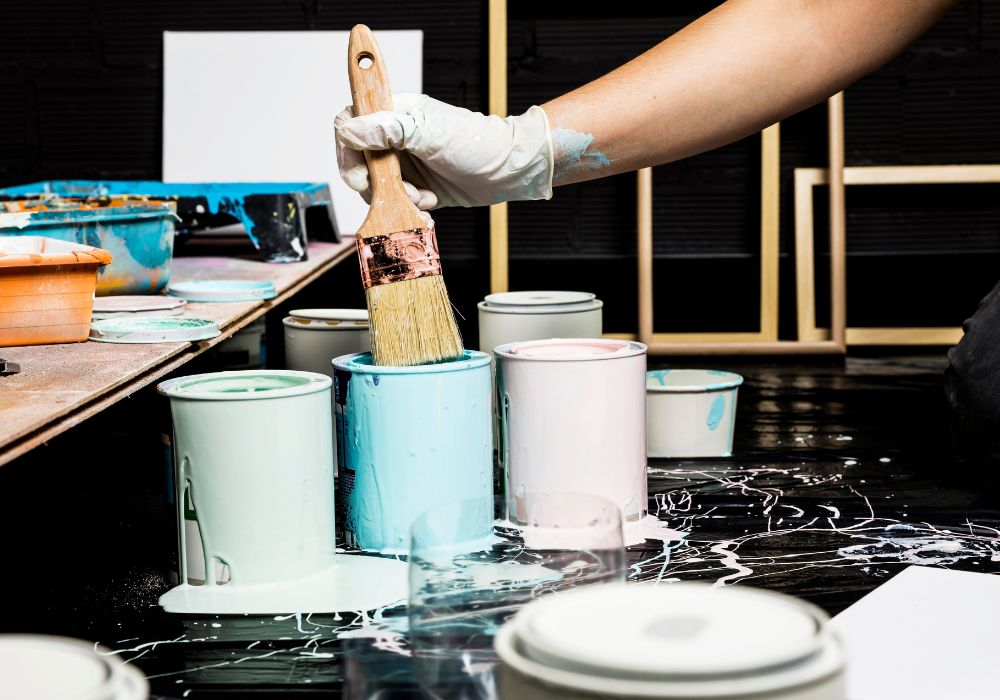
Walking down the paint aisle at the hardware store can be overwhelming. There are hundreds of cans that all look the same. You might find yourself asking, what is the difference between primer and paint? Paint provides the color and style, while primer provides the grip and support. They might look alike in the can, but they do completely opposite jobs.
Key Differences: Primer vs. Paint at a Glance
Paint and primer are made of different ingredients. This is why professional painting services treat them as separate, essential steps.
| Feature | Primer | Paint |
| Primary Purpose | Prepare the surface, ensure adhesion, and seal stains. | Provide color, sheen, and a durable, protective finish. |
| Composition | Maximizes Binders & Fillers: Formulated to grip and seal the substrate. | Maximizes Pigments & Finish Resins: Formulated for color, sheen, and surface resistance. |
| Appearance/Finish | Typically flat or matte; not designed to be a final finish. | Comes in a variety of sheens (matte, satin, gloss) for the final look. |
| Application Stage | Applied first, directly onto the prepared raw surface. | Applied last, over the primer (or a previously painted surface). |
When to Use Primer: Key Scenarios
You might think you can skip this step to save money or time. But skipping primer often leads to disaster. Knowing when to use primer is essential for a long-lasting finish.
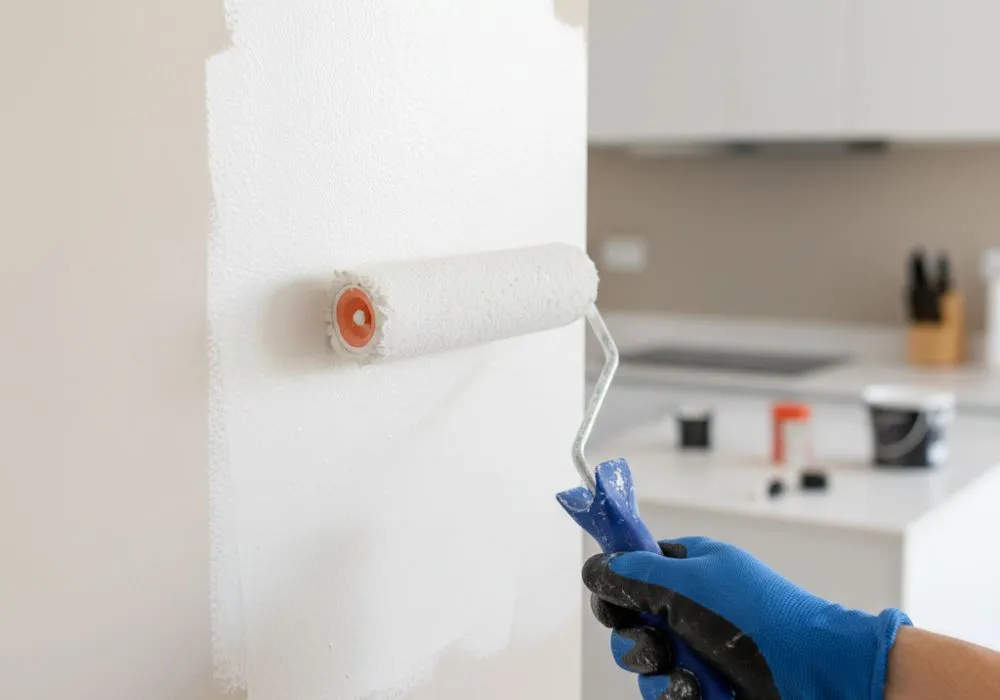
Sealing Porous Surfaces (New Drywall & Wood)
Fresh drywall, plaster, and bare wood act just like a sponge. If you paint directly on them, they will soak up your expensive paint immediately.
You need a primer for sealing porous surfaces first. This creates a sealed layer, so your paint sits on top nicely. This is especially important for outdoor projects. If you are treating exterior wood, primer helps the finish last through the seasons.
Masking Stains and Odors
Things like cigarette smoke, crayons, or water damage will bleed right through. Even if you apply three coats of paint, the stain will often come back.
Primer creates a barrier. It locks these stains away forever so they cannot ruin your topcoat. A stain-blocking primer covers everything up for a fresh start. This is vital when refreshing kitchen walls.
High-Humidity Areas
Bathrooms, laundry rooms, and damp basements are high-risk zones. Paint can peel easily in these environments.
You need a primer that is designed to resist mildew and moisture. This is key for bathroom wall protection. It keeps the dampness from getting behind the color. By using the right primer, you stop mold from growing under your new paint job.
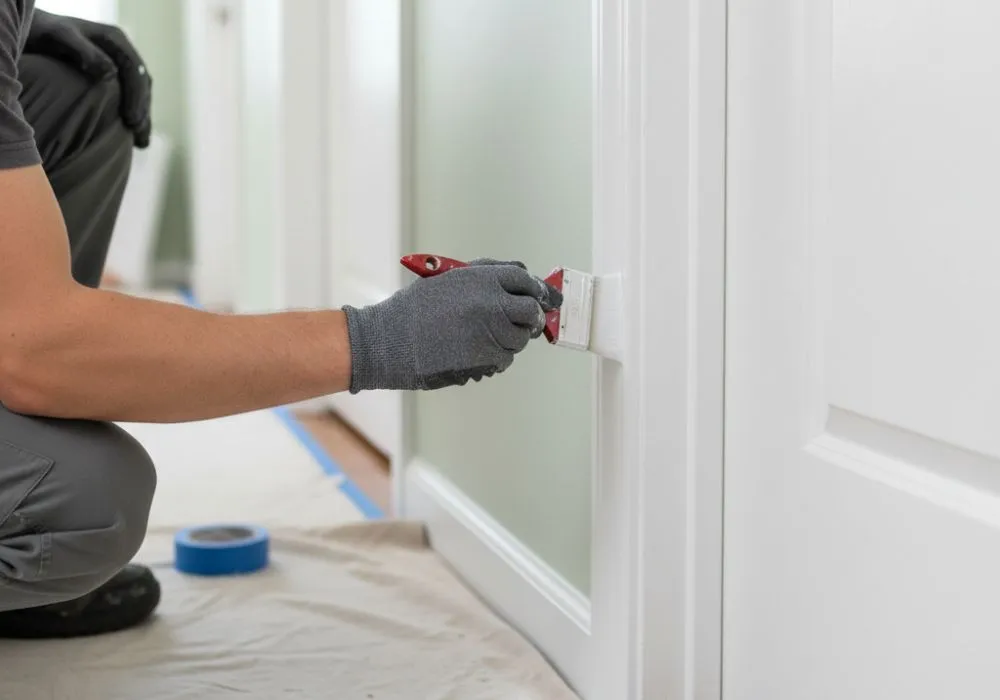
The Myth of “Paint and Primer in One”
You have probably seen cans that promise to do it all. These are called paint and primer in one products, and they sound like a great time-saver. Here is the reality of when to use them and when to avoid them:
- Simple Color Swaps: These products work well if you are changing a light color to another light color. They are fine for walls that are already smooth, clean, and in good shape.
- Difficult Surfaces: They cannot bond to glossy or stained surfaces like a dedicated primer can. If you are painting over a stain or peeling paint, it is always better to use a separate primer to ensure the job lasts.
- The Real Difference: Understanding this limitation is part of knowing what the difference is between primer and paint. A combo product is convenient, but it is not a replacement for real prep work.
The Importance of Prep Work
Even the best primer fails on a dirty wall. Take a look at why cleaning is the most important step in the process:

- Remove the Grime: Dust, dirt, and oil will ruin the adhesion immediately. You must wash the walls and let them dry completely before you start painting.
- Exterior Cleaning: This is true for outside walls too. Make sure you handle proper surface preparation before applying any product.
- Ready for Bonding: Once the surface is clean, you are ready to apply your bonding agent. This small step makes a huge difference in the final look.
Conclusion
Now you know the secret to a professional finish. Primer is the foundation, and paint is the decoration. You cannot build a strong house without a solid foundation. Next time someone asks, “What is the difference between primer and paint?” you will know the answer. It is the difference between a job done and a job done right. If you are dealing with a complex project, the team at Platinum Pro Painting can handle the hard work for you.