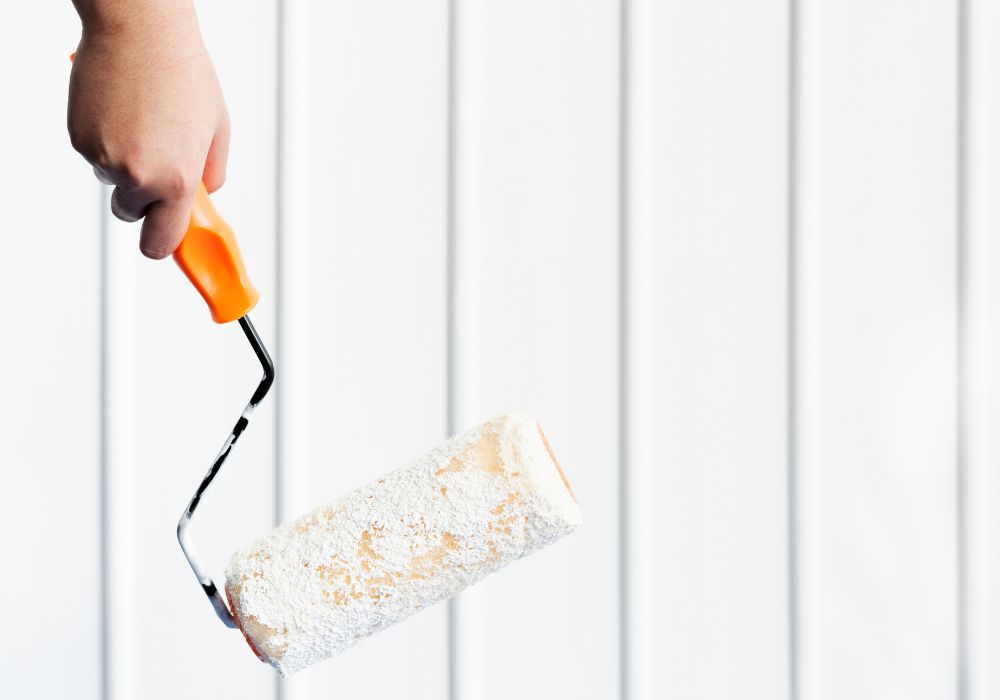
A shiny ceiling can look terrible because it shows every tiny bump and wave in the drywall. That’s why ceiling paint is almost always flat, while wall paint comes in shinier, more durable sheens. The real secret to a great paint job is knowing what is the difference between wall and ceiling paint. Let’s break it down so you can avoid the most common painting headaches.
Ceiling Paint vs. Wall Paint: A Quick Comparison
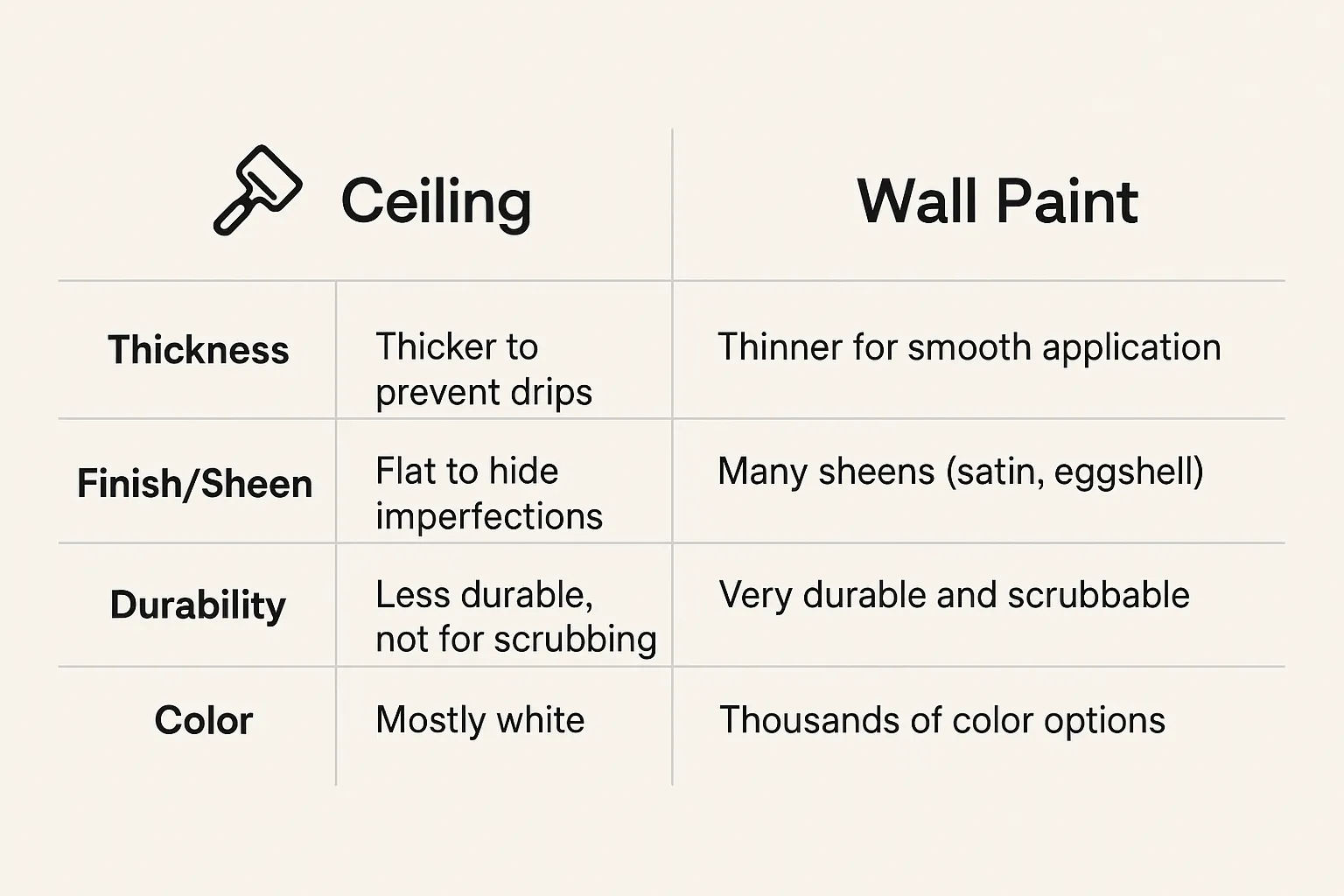
Let’s start with a quick and easy guide. This table shows the main points of the ceiling paint vs wall paint debate. It’s a great way to see the key differences at a glance.
Using the right paint for the right surface is essential. It’s why professional interior painting in Saskatoon always involves using both types to get the best results.
A Closer Look at Ceiling Paint
Ceiling paint is a special formula designed for one of the trickiest parts of a room. Let’s look at what makes it so unique.
It’s Thicker for a Reason
Ceiling paint is much thicker than wall paint. This helps prevent it from dripping all over you and the floor while you’re painting overhead. This thickness helps it stick to the ceiling better, which means less mess and a cleaner job.
A Flat Finish Hides Flaws
Ceilings are large, flat surfaces that show every little bump and crack. Ceiling paint has a “flat” finish, which means it doesn’t reflect light. This is great for hiding those small imperfections, so your ceiling looks smooth and flawless.

Limited Durability and Colors
Since nobody touches the ceiling, the paint doesn’t need to be tough or scrubbable. It’s usually sold in white or a few off-white shades to help make rooms feel bigger and brighter. If you need a special color for your ceiling, knowing how to match a paint color accurately is a very useful skill.
Understanding Wall Paint
Wall paint is built to handle everyday life. It’s made to be both beautiful and tough.
Designed for Durability
Walls have to put up with a lot, from fingerprints to scuff marks. Wall paint is made with binders that make it durable and easy to clean. This is especially important in busy areas. For example, our Saskatoon kitchen painters always recommend a scrubbable paint to handle spills and splatters.
A World of Finishes and Colors
This is where you can get creative! Wall paint comes in thousands of colors and many different sheens. The paint finish differences, from flat to shiny semi-gloss, can completely change the look of a room. A shinier finish is easier to clean, while a flatter finish is better at hiding bumps.
Can You Use Ceiling Paint on Walls?
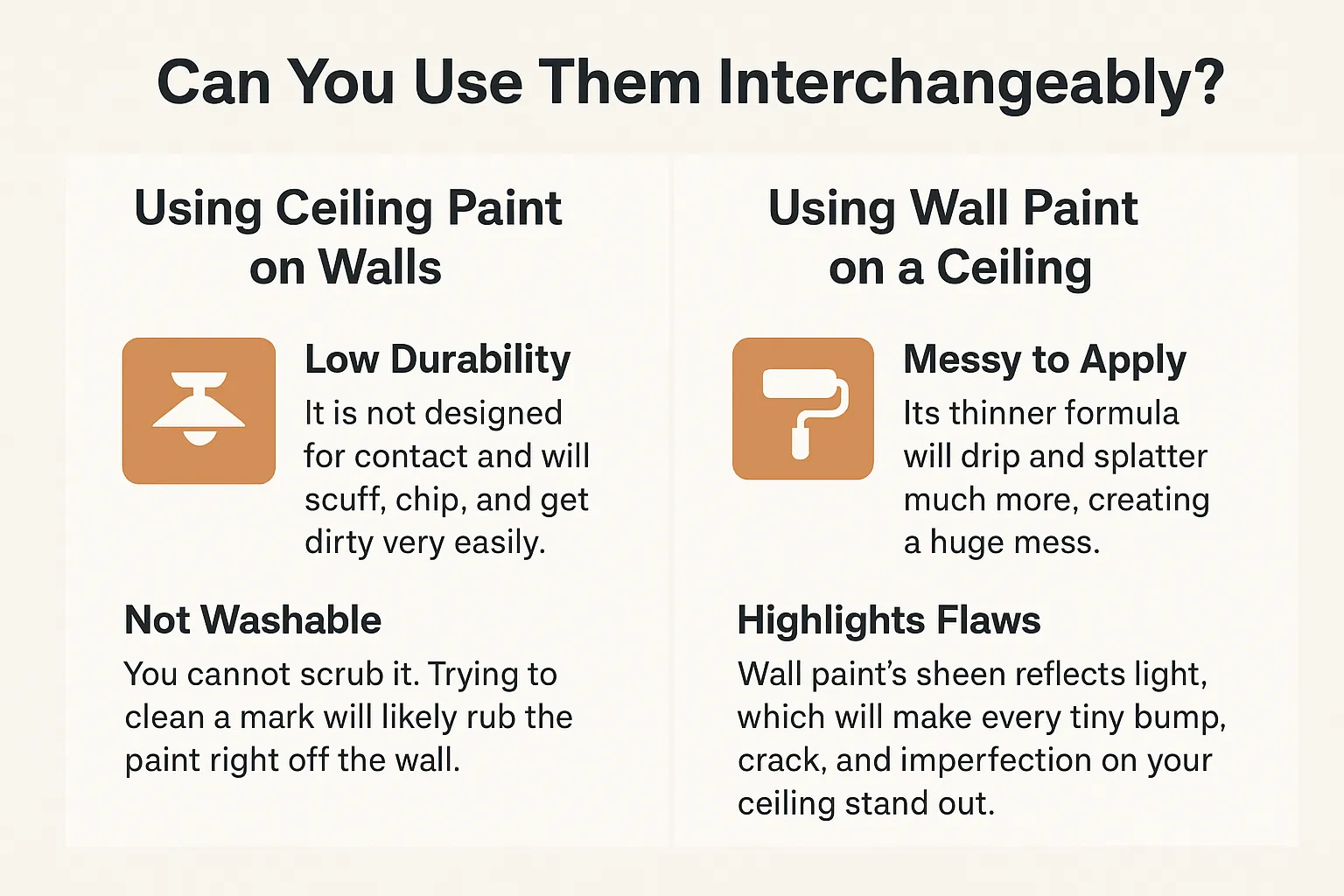
The main problem is that it’s not made to be durable. It will get dirty and scuffed very easily, and you can’t scrub it without rubbing the paint right off. It’s okay for a low-traffic area like the inside of a closet, but not for your main walls.
Using wall paint on a ceiling isn’t a great idea either. It’s thinner, so it will drip and splatter everywhere. Plus, its shinier finish will highlight every single imperfection on the ceiling. Using the right product is a key part of all our painting services.
The Final Word
The main answer to what is the difference between wall and ceiling paint comes down to three things: thickness, finish, and durability.
Ceiling paint is thick and flat to make painting overhead easier and hide flaws. Wall paint is thinner, comes in many colors and sheens, and is tough enough to be scrubbed. Using the right one for each job is the key to a beautiful, long-lasting result.
If you want expert advice or a perfect paint job without the stress, contact us. The team at Platinum Pro Painting is always here to help!
Author Bio:
John, founder of Platinum Pro Painting, is an expert with over a decade of experience in interior painting. He specializes in selecting the perfect paint type and finish for every surface, ensuring a flawless and durable result that stands the test of time. John’s advice helps Saskatoon homeowners avoid common mistakes and achieve a truly professional look.