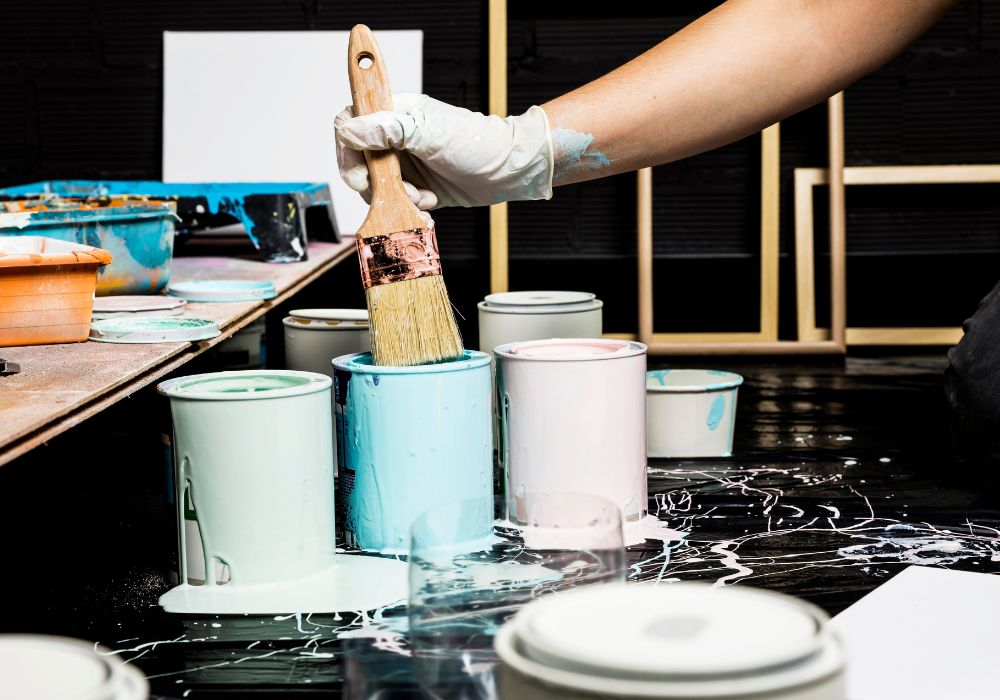
Before you pour that leftover can of exterior paint into your interior bucket, stop. What seems like a clever money-saving trick is actually one of the most common and costly DIY painting mistakes. Ask yourself, can I mix interior and exterior paint?
The answer is no, you shouldn’t. And trying to do so will ruin your project, waste your time, and potentially damage your surfaces.
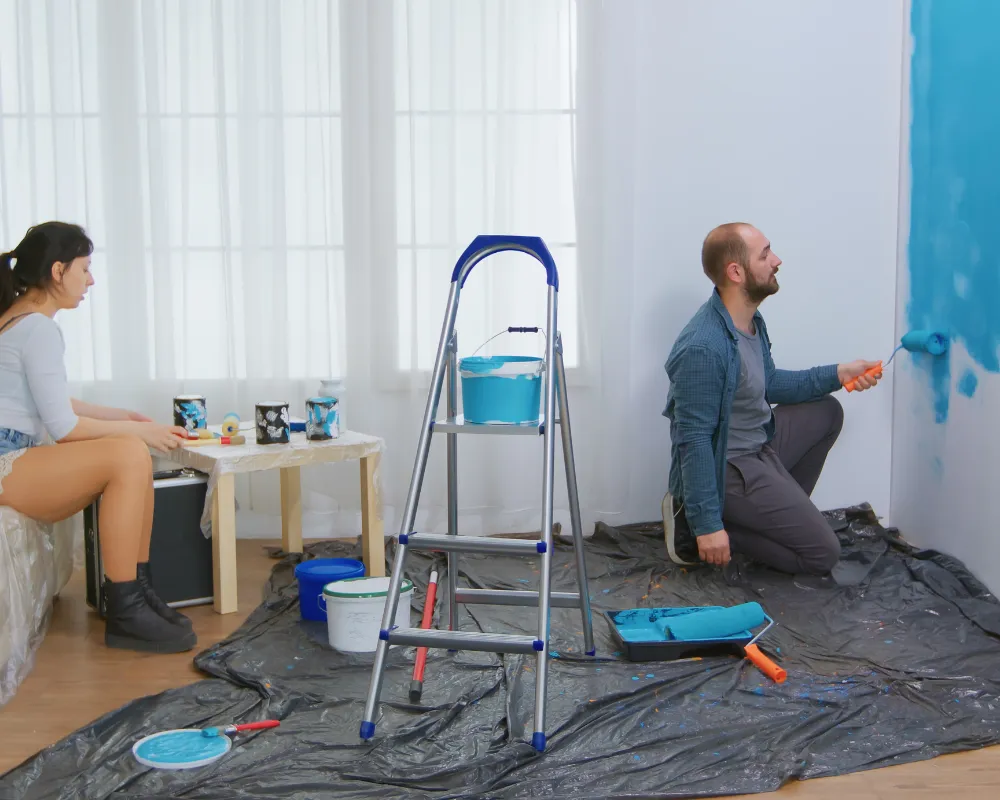
What Happens When You Mix Interior and Exterior Paint?
These paints have different jobs. So, can you mix interior and exterior house pains together? When you combine them, you create a confused, low-quality blend.
You Destroy the Binders
The binder makes paint stick and gives it its durability. Exterior paint has flexible binders to handle temperature swings without cracking. Interior paint has rigid binders to resist scuffs and stains. Mixing them results in a weak binder that is neither flexible nor tough.
You Lose All Weather Protection
Exterior paint is packed with additives that protect surfaces from rain, snow, and UV rays. Without them, your paint will fade and peel quickly. This is precisely why using interior paint on the outside is a recipe for disaster.
The Finish Looks Terrible
Even if the colors are identical, the sheens (matte, satin, etc.) are different. When mixed, they won’t combine smoothly. You end up with a blotchy, uneven finish. The color can also look strange as the mismatched chemicals dry.
You Bring Harmful Chemicals Indoors
To fight mold and mildew, exterior paints contain fungicides and other chemicals. These are not safe for indoor air quality. When you bring that paint inside, those chemicals can release fumes (VOCs). These are unhealthy to breathe in an enclosed space.
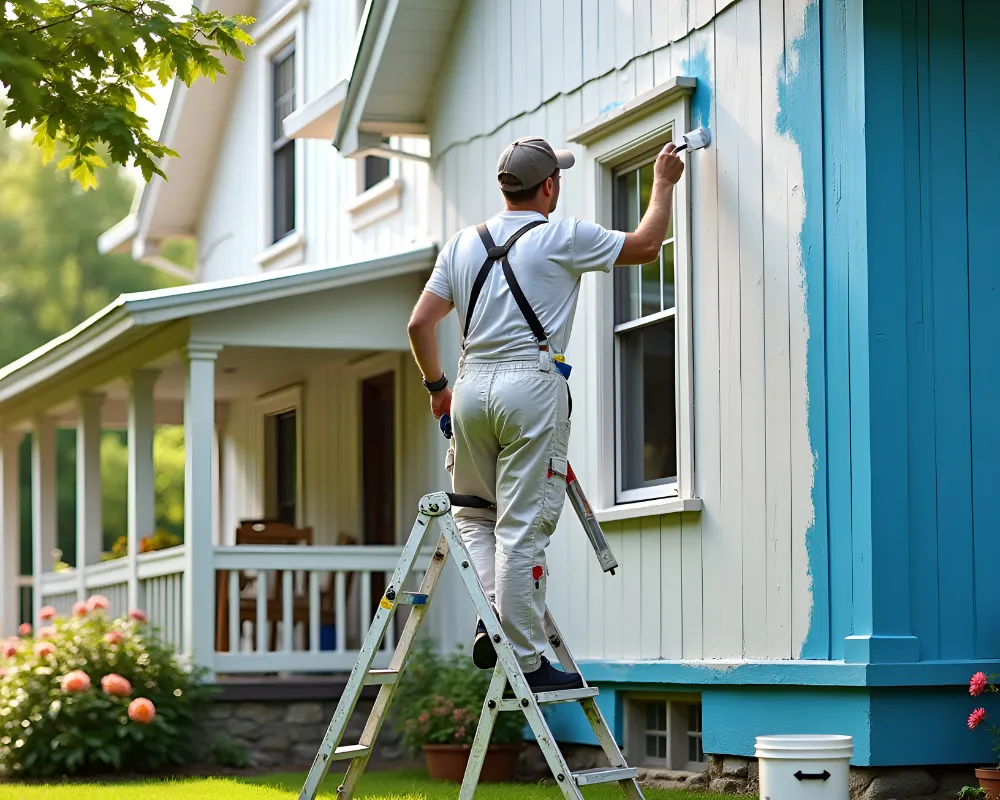
What If I Accidentally Used Exterior Paint Inside?
Don’t panic, it’s a fixable mistake. The biggest concern here is the off-gassing of chemicals not meant for indoor use.
Ventilate the room as much as possible. Open all the windows and use fans to circulate fresh air. For a tiny scuff, this might be enough.
Let the paint fully cure, then seal it. Apply a high-quality, stain-blocking primer over the spot. This will trap the additives and prevent them from leaching into the air. Once the primer is dry, you can repaint with the correct interior product.
How Do You Turn Interior Paint into Exterior Paint?
This is another common question, and the answer is simple: you can’t. This is why:
- No Additive Exists – There’s nothing you can buy at a hardware store that will magically make interior paint exterior-grade.
- Missing UV Blockers – Exterior paint has UV protection to resist fading and sun damage. Interior paint does not.
- No Mildewcides – Exterior paint includes chemicals that fight mold and mildew outdoors. Interior paint lacks these.
- Wrong Binders – Interior paint has rigid binders for scuff resistance. Exterior paint uses flexible binders to handle temperature changes.
Trying to create a shortcut will only cost you time and money when the paint fails within a year. The only real solution is to buy the right paint for the job. Particularly for high-moisture spaces like bathrooms, where durability matters.
Final Thoughts
So, can you mix interior and exterior paints? Mixing paint seems like a clever hack. But, it’s one that will always backfire. It leads to poor results, and potential health risks. It will be a paint job that you’ll have to redo much sooner than you’d like.
If you want a perfect result without the guesswork, contact Platinum Pro Painters. Get the job done right!