It’s a tempting shortcut. You have leftover ceiling paint, and your wall is ready for a new color. You think: It’s white, it’s thick, and it’s basically primer, right? It seems like a clever way to save a trip to the store and use up old paint.
But can you use ceiling paint as a primer? The professional and honest answer is no, you shouldn’t.
Why Ceiling Paint Fails as a Primer
Primer is the foundation of your paint job. Its job is to grip the surface and create a uniform base for your topcoat. Ceiling paint is designed to be a topcoat itself, which is a very specific one. It’s a poor substitute.
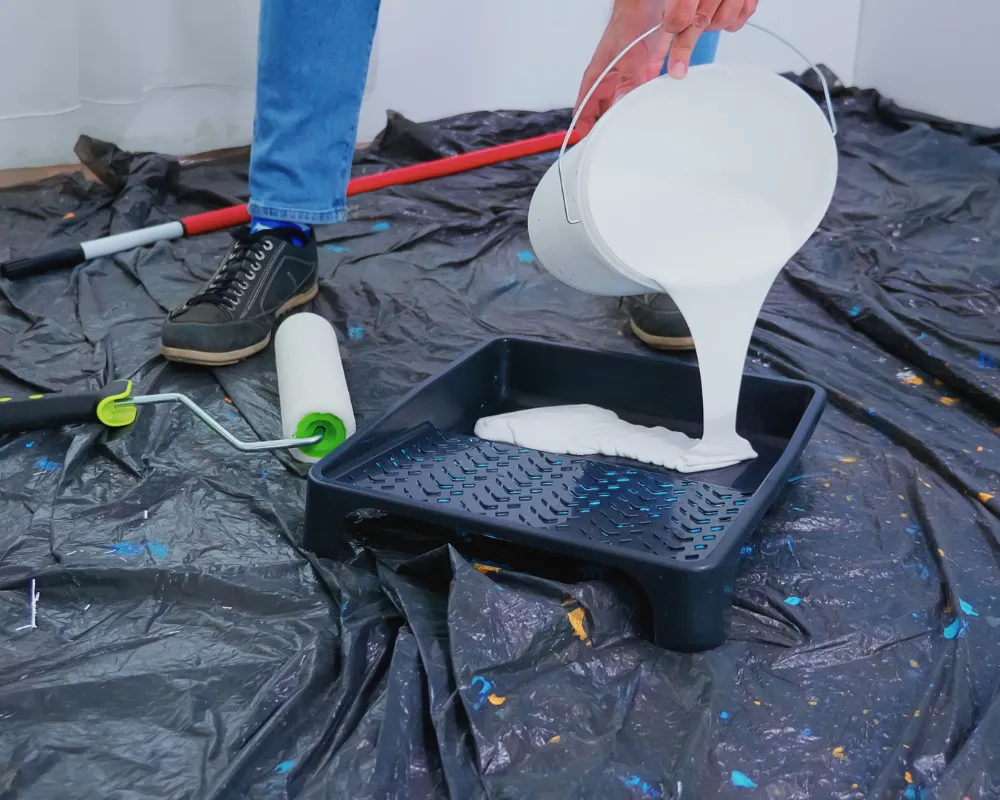
It Lacks Bonding Power
A true primer is packed with adhesive resins that create a powerful bond with the surface. Ceiling paint lacks these agents. Your topcoat won’t stick properly and is likely to peel or chip easily over time.
It Doesn’t Block Stains
Have a water spot, a marker scribble, or a smoke stain? A good ceiling primer is designed to seal these stains so they don’t bleed through your final color. Ceiling paint has zero stain-blocking ability, and those old blemishes will eventually reappear.
It Won’t Seal Porous Surfaces
Bare drywall, new plaster, and raw wood are like sponges; they soak up paint. Primer is designed to seal these surfaces so your topcoat goes on evenly.
Unlike many interior paints, ceiling paint doesn’t seal. This leads to a blotchy, inconsistent finish that looks unprofessional. This is especially true if you try to use ceiling paint as a primer on wood.
It Isn’t Durable or Washable
Ceiling paint has a flat, non-reflective finish to hide imperfections, but it’s not made to be touched. If you use it on a wall, it will scuff at the slightest bump and cannot be wiped clean without damaging the finish. This is a key reason you shouldn’t use ceiling paint on walls.

The Rare Exceptions (And Why You Still Shouldn’t)
A professional painter would rarely do this. But there are a couple of very specific, low-risk scenarios where you could technically get away with it.
- Painting Over the Exact Same Color: If a wall is already painted, is in perfect condition, and you are just freshening it up with the same color, the ceiling paint can act as a simple undercoat.
- Low-Traffic, Low-Impact Areas: For the inside of a little-used closet, using leftover ceiling paint as a base coat probably won’t cause any major issues.
Even in these cases, a proper primer is always the better choice for a durable, long-lasting job. Mixing painting ingredients doesn’t always work!
Primer vs. Ceiling Paint: What’s the Real Difference?
Understanding their purpose makes it clear why they aren’t interchangeable. According to paint experts, primer is an undercoat, not a topcoat.

If you’re looking for a shortcut, a best ceiling paint and primer in one product is a better option. These are simply high-quality, thick paints that offer great coverage. They are still not a replacement for a true problem-solving primer on difficult surfaces.
Why a Real Primer is Always the Best Choice
So, when you find yourself asking, can you use ceiling paint as a primer?, remember that the answer is a clear “no” for any job you want to last. Skipping the primer step might save you an hour now. Just remember, it will cost you much more time and money when you have to fix the peeling, stained, and scuffed results down the road.